
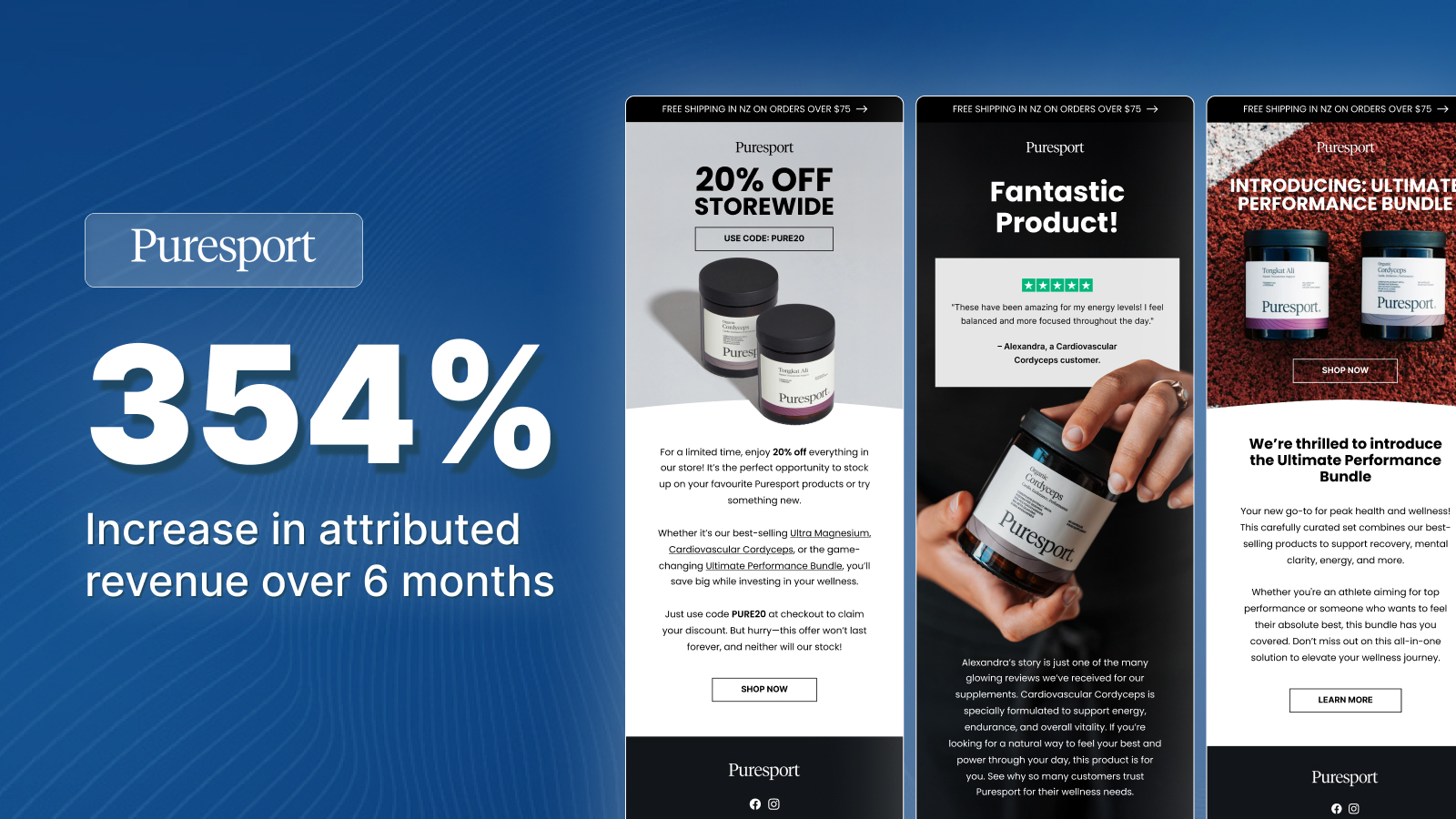
Puresport had exactly the kind of customer behaviour every DTC supplement brand wants and struggles to build from scratch: predictable, repeatable reordering. Supplements are a category built on habitual use, which means the customer relationship is naturally suited to a subscription-like reorder rhythm even without a formal subscription product, but Puresport's email account did nothing with that advantage. Flows stopped dead after the first purchase. Campaigns treated a brand-new customer and someone on their fifth reorder identically, which meant the single biggest lever a consumables brand has access to, the replenishment cycle, was sitting completely unused.
The challenge
Product usage data made the reorder window obvious: customers who bought a given product typically needed to reorder within a predictable window, which is exactly the kind of signal a lifecycle email programme should be built around. But nothing in Klaviyo was actually built around it. There was no lifecycle logic distinguishing a brand-new customer from a loyal, repeat one, no structured path guiding someone from their first purchase toward habitual reordering, and no separate track recognising and rewarding the highest-value customers differently from everyone else. Every customer, regardless of history or value, received the same generic messaging.
What In-box did
- Mapped the replenishment cycle product by product and built timed reorder reminders directly around it, so the prompt to buy again arrived just as each customer was running low
- Split the list into new, active, at-risk and lapsed segments, each with its own tailored messaging, so a first-time buyer and a fifth-reorder loyalist finally received different emails
- Built a post-purchase education series covering usage, dosage and results, to increase product consumption and reduce churn before the reorder window ever arrived
- Layered in a dedicated VIP track for the highest-value customers, recognising and rewarding the small group driving a disproportionate share of revenue
The results
Attributed revenue grew 354% over six months, and the shape of that growth matters as much as the number itself: it compounded month on month rather than arriving as a single spike, which is the signature of a lifecycle system working exactly as intended rather than one strong campaign inflating a single month's figures. Repeat purchase rate lifted alongside overall revenue, confirming the growth was structural, driven by more customers reordering on schedule, rather than a temporary bump from one unusually strong send. Over a full six-month window, that combination of compounding growth and lifted repeat purchase rate is the clearest possible evidence that the replenishment-cycle logic, not a one-off promotional push, is what's actually driving the 354% figure.
The takeaway for supplement and consumables brands: if your product has a natural reorder cycle, a generic campaign calendar is underselling it badly. Lifecycle segmentation, new, active, at-risk, lapsed, VIP, is where compounding revenue like Puresport's 354% six-month lift actually comes from, because it messages each customer according to where they sit in their own usage cycle rather than a one-size-fits-all schedule that ignores it entirely.
Related services
The work behind this result:
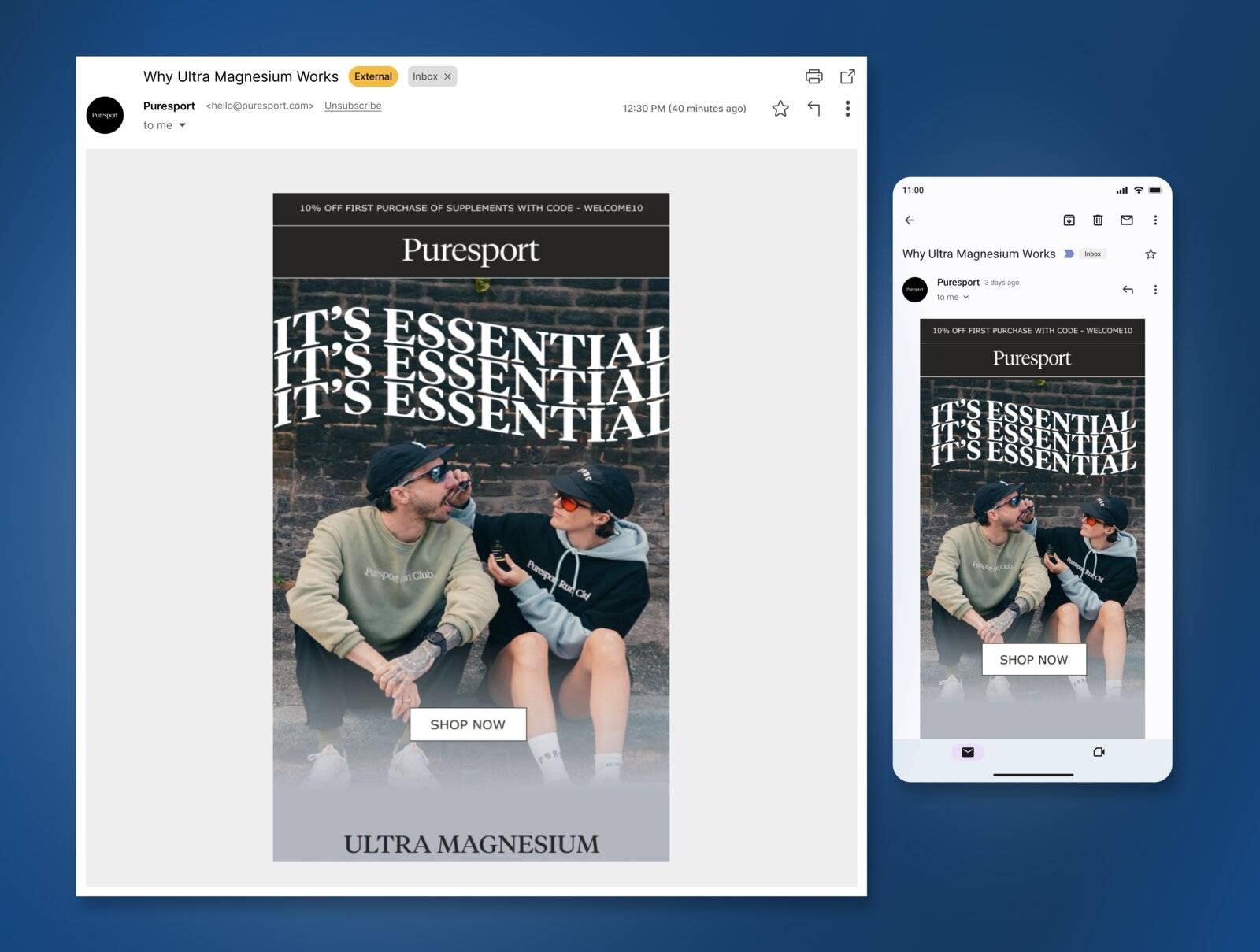
Want to see the design work behind emails like these? Browse our design portfolio.
The designs


Want results like this in your account?
We start with a free audit of your email and SMS setup, then show you exactly where the revenue is hiding.