
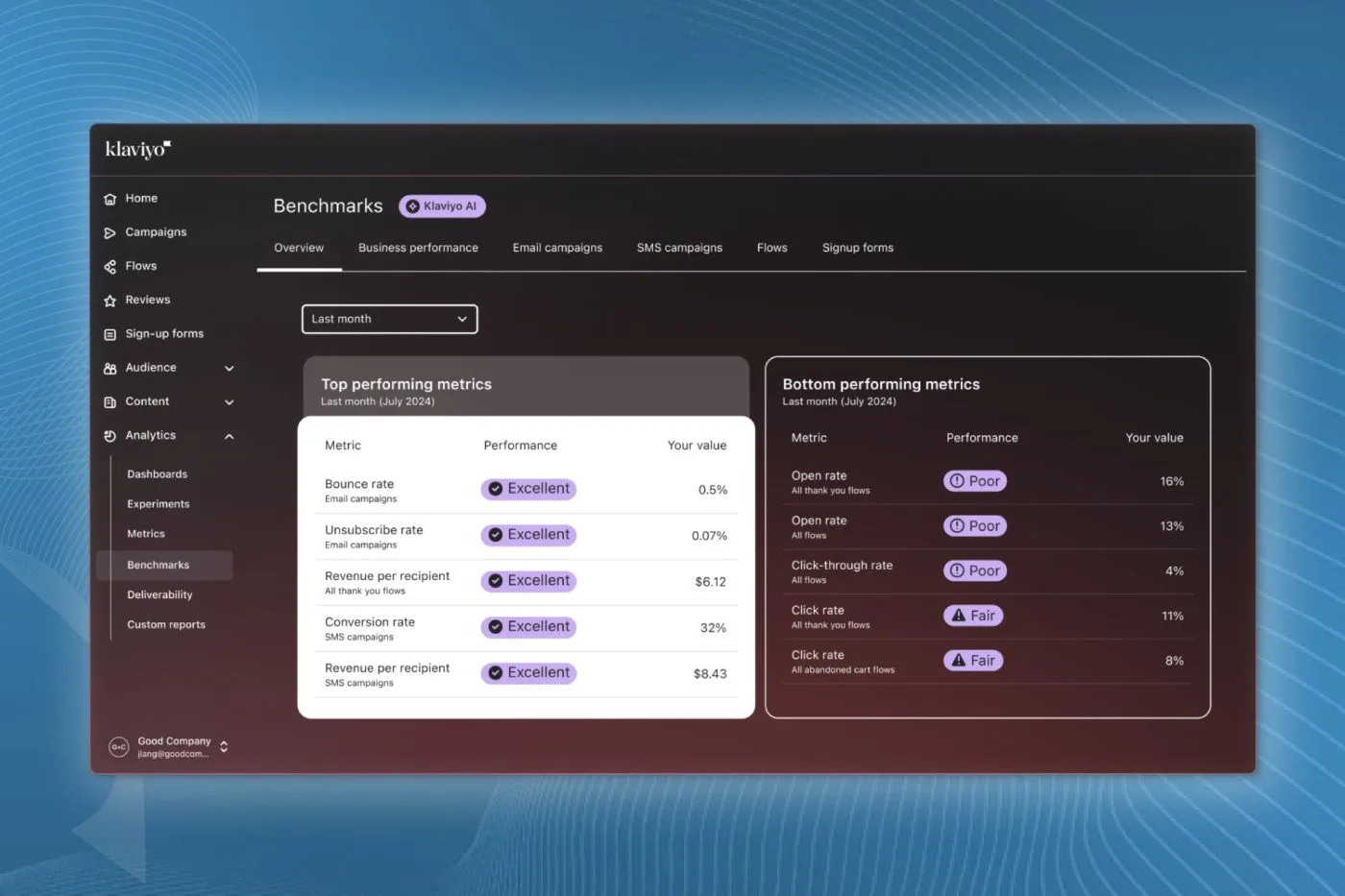
"Should we be doing email or SMS?" is one of the questions I get asked the most. I run In-box, an email and SMS marketing agency, and after five years and more than 500 ecommerce brands, the honest answer is both. However, they shouldn’t necessarily be used in the same way or for the same jobs.
Treat SMS as the same email with a shorter character limit, and you'll burn through your list, annoy your best customers, and spend more than you need to. Use each channel according to its specific advantages, and they’ll end up making each other stronger.
What email is good at
Think of email as your workhorse. Emails are cheap to send and have room for images, stories, and multiple products. Plus, people already expect to hear from brands there. That makes it the right channel for:
- Automated flows: Welcome series, abandoned cart, post-purchase, and win-back. Across our clients, automated flows drive roughly 35% of Klaviyo revenue.
- Storytelling and education: How a product is made, how to use it, and what makes it different.
- Regular campaigns: New products, collections, and seasonal sales.
For sequences you can personally adapt, we've collected a range of nurture campaign examples.
What SMS is good at
SMS is more personal than email. Texts show up next to messages from friends and family, which is why they get attention, and also why they get plenty of unsubscribes when brands overuse them. SMS also costs more because you’re paying per message.
That makes SMS right for short and time-sensitive messages like last-chance sale alerts, restock and early-access alerts, delivery updates, and abandoned cart nudges sent alongside email.
The best rule of thumb is: if it can wait until tomorrow, send an email. If it can't wait, consider a text.
Don't ask for both at once
Many brands add fields for email addresses and phone numbers on the same sign-up form, one step after the other, but that can be a costly mistake. In our experience, asking for a phone number straight after the email address causes 25% to 45% of people to drop off before reaching the reward.
So, we decided to split them. Our main sign-up form asks for an email address only, with a 15% offer. In our testing, 15% beats 10% on both conversion and average order value.
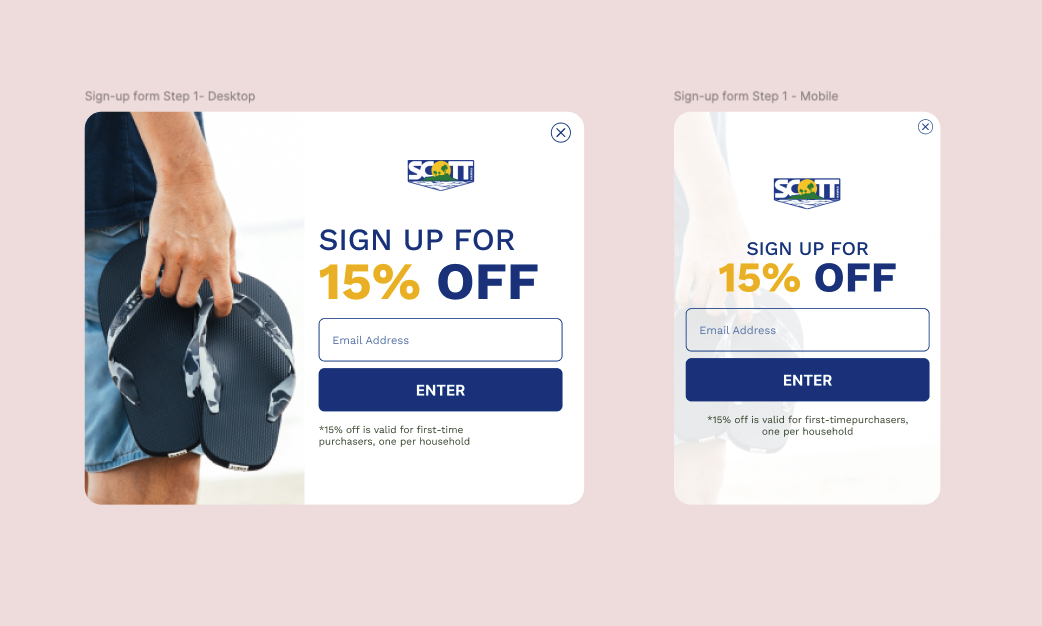
Later, existing email subscribers without a phone number on file will see a separate SMS form that sells the benefit of texts. It shows up after 30 seconds of browsing on the site, and no more than once every 14 days.
We break the full setup down in our high-volume Shopify sign-up form strategy.
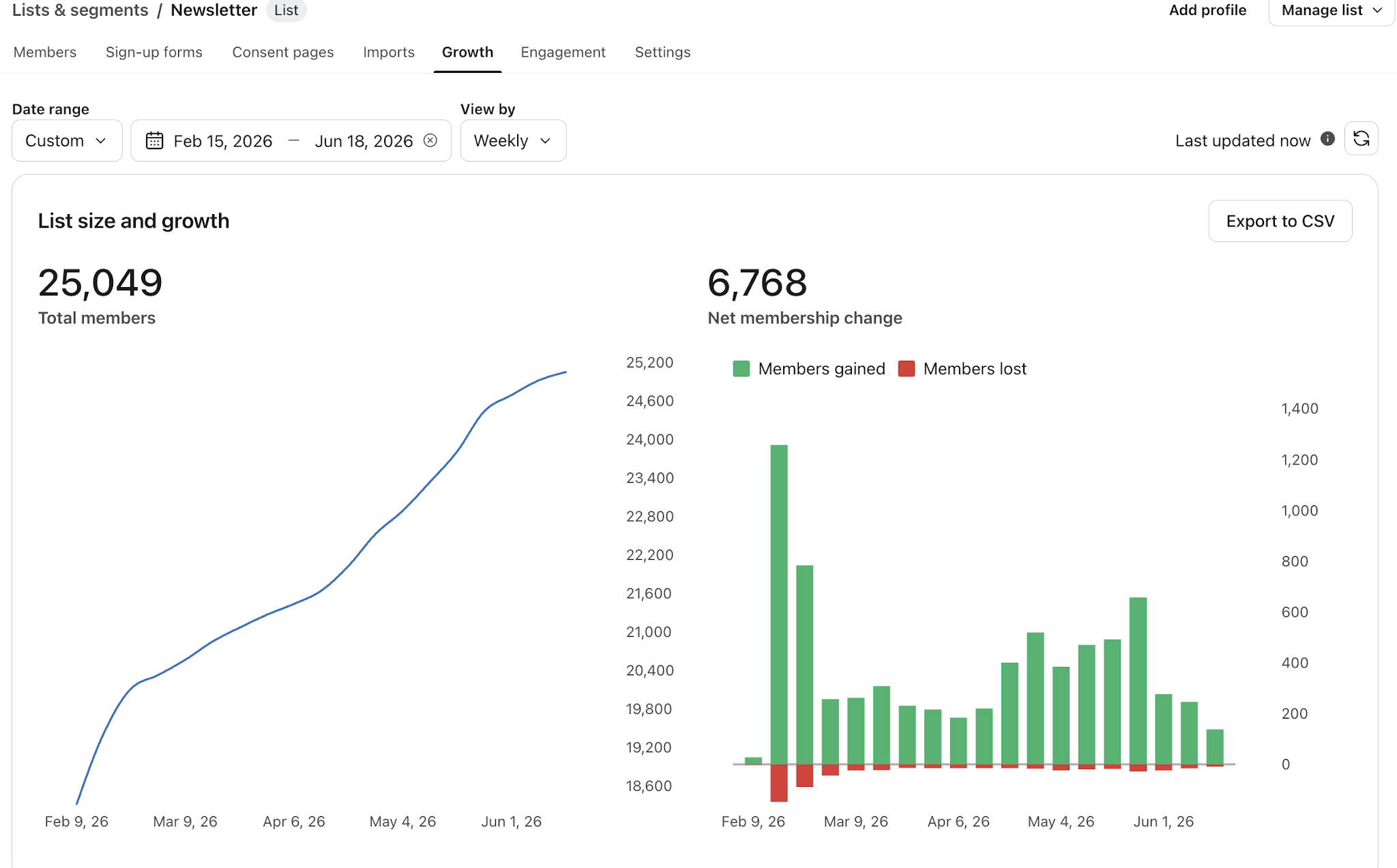
It works. For Liquified RV, the newsletter list grew to 25,049 total subscribers, increasing by 6,768 in just over four months from 15 February to 18 June 2026. A new, dedicated SMS list started from zero over the same period and reached 297 subscribers. That’s exactly why SMS needs its own capture rather than just an extra field on the main form.
Make them work together
The best results come when email and SMS are planned as one integrated system.
When we built out flows for Dermavenue, we set up 11 email flows and 5 SMS flows covering welcome, cart, checkout, browse abandonment, and delivery. In the first nine weeks, email did the heavy lifting: between 18 April and 20 June 2026, Klaviyo revenue grew 2,691% to $398,191.56, all attributed to email.
Sales work the same way. Email announces the sale and does the selling. Then, when urgency is real, SMS steps in for the final few hours. Just don't risk annoying your customers by sending the same message on both channels at once. If an email subscriber already bought, they shouldn't also get a text telling them the sale is ending.
Get consent right, and watch the cost
SMS has stricter rules than email in most countries. You need clear, explicit permission to text people, and the requirements vary by market, so check the local rules before you hit send.
Be more selective with SMS, which is paid per message. Send to engaged subscribers, keep your messages short, and measure revenue per send rather than by clicks.
Some industries also benefit more from SMS marketing than others. SMS is far more effective for a brand with frequent drops or limited stock than one selling a once-a-year purchase. Our guide to email marketing niches is a good starting point for figuring out where your brand fits on that spectrum.
The short version
Use email for the bulk of your marketing: flows, stories, and campaigns. Be selective and save SMS for short, urgent, personal messages. Build the email and SMS lists separately so you don't scare people off at sign-up, and plan the two channels together.
To see how this works with real accounts, browse our ecommerce email and SMS case studies. If you need emails to send alongside your texts, our free Figma email template pack has ready-made welcome, abandoned cart, and post-purchase designs.


