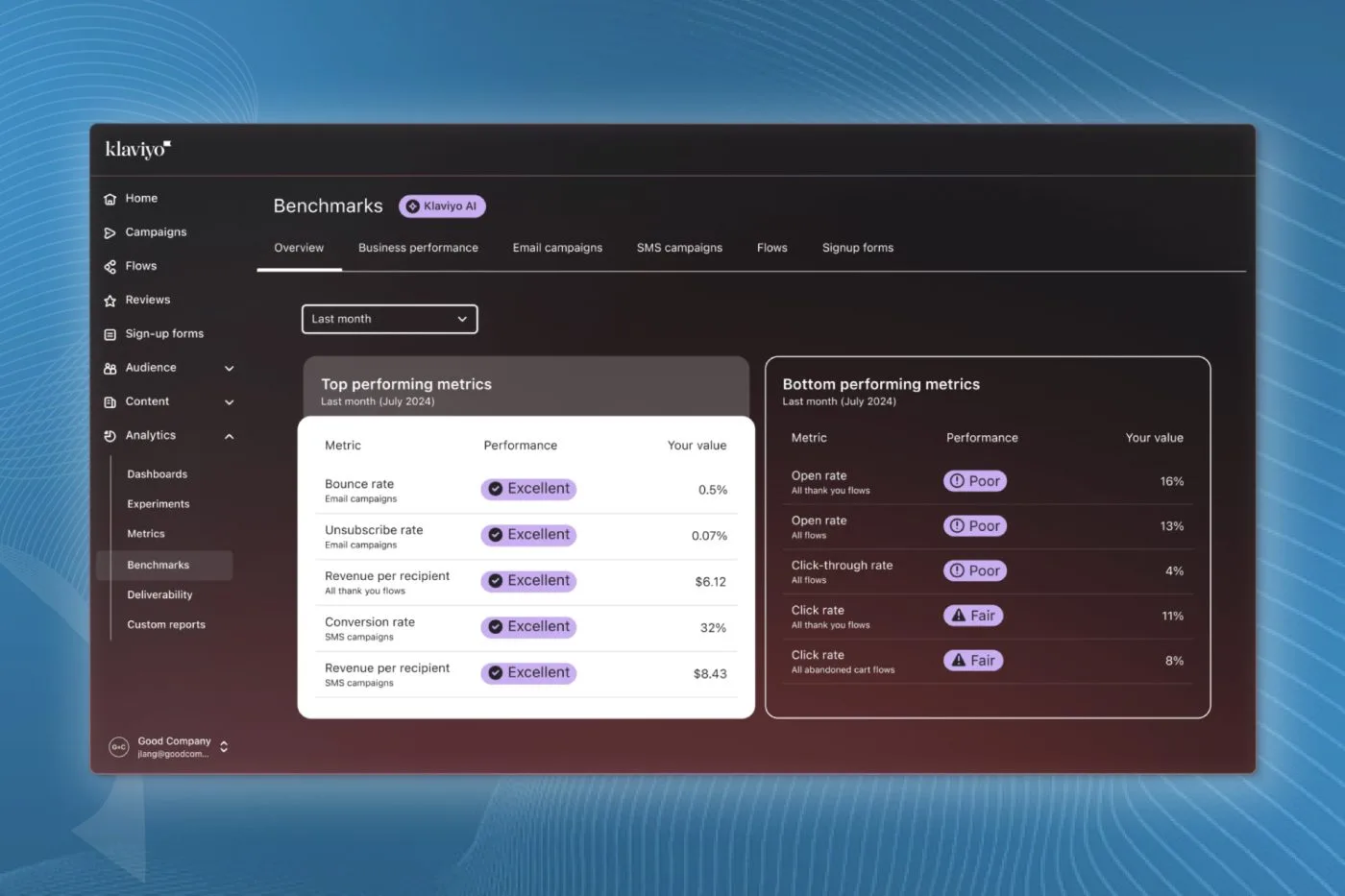
Most ecommerce founders log into their email platform, glance at the attributed revenue number on the dashboard, and call it a day. That is a mistake.
Attributed revenue numbers look flattering, but they do not tell you what is actually driving your store growth or where you are leaking cash. If you want to optimise your retention marketing, you need to know how to navigate your reporting properly.
The Truth About Attributed Revenue
When you look at the overview tab in Omnisend, you see total attributed revenue across your channels (email, SMS, and push). It is easy to take this figure at face value, but you have to understand how the platform calculates it.
Omnisend relies on last-touch attribution within your configured window. If a customer receives a campaign email in the morning, clicks an SMS reminder in the afternoon, and places an order, 100% of that order value gets credited to SMS. Last-touch attribution is an educated guess at best.
Use the overview for a quick pulse check on 7-day or 30-day directional trends. Do not treat it as absolute financial truth.
Using Product Performance to Feed Your Automations
Where reporting gets genuinely useful is in the deeper reports tab. One of the best views available is the breakdown of your 100 most ordered products and your back-in-stock requests.
Rather than letting that data sit on a dashboard, you should immediately feed it back into your flows. Once you know your genuine top 3 to 5 volume drivers, you can use them to shape your strategy:
- Post-purchase flows: Create trigger splits based on whether someone bought a hero product or an accessory, then cross-sell the complementary items.
- Abandoned checkout flows: Highlight dynamic reviews and objections specific to your top-selling items.
- Stock alerts: Monitor back-in-stock requests to inform both re-order volumes and targeted campaign segments.
Data without action is just overhead. If a report reveals a clear purchasing pattern, build an automation split around it within 24 hours.
Understanding Deliverability by Domain
Omnisend includes a dedicated deliverability dashboard that gives you a sender reputation score labelled fair, good, or excellent. Here is the thing: that reputation label is benchmarked against other Omnisend accounts, not against the inbox providers themselves.
Being rated good means you are performing above the platform average. It does not automatically guarantee your emails are landing in the primary inbox.
Instead of relying on the headline score, scroll down to the email domain performance breakdown. You do not have one universal sender reputation. Gmail has a reputation score for your domain, Outlook has another, and Yahoo has its own.
If your open rates sit at 45% across custom business domains but drop to 12% on Gmail, you have a Gmail-specific deliverability problem. Domain-level reporting lets you spot those issues early before your entire sending domain gets burned.
Cutting Your Billing with Proactive List Cleaning
Most email platforms charge you strictly based on contact tiers, which gives them very little incentive to tell you when your list is bloated. One feature I respect in Omnisend is their built-in list cleaning tool.
The system actively flags disposable addresses, invalid contacts, and unengaged profiles that represent roughly 1% to 5% of an average store list. You can clean and suppress those contacts directly inside the interface.
Once you suppress unengaged profiles, you can immediately head into your billing settings and downgrade your tier. You improve your inbox placement and lower your monthly software bill in five minutes flat.
The Real Limitation of Built-In AI Insights
Omnisend has started integrating AI tools directly into its reporting and workflow suggestions. While helpful for drafting copy variations, you need to be very careful when using AI for strategic decision-making.
AI inside an email platform only sees your email and SMS data in total isolation. It does not know your product margins, your shipping overheads, your customer service return rates, or your 90-day repeat purchase velocity from other channels.
An AI recommendation might tell you to push a specific product because it generated high click revenue last week, completely ignoring that the item has a 30% return rate and razor-thin margins. Keep your strategic decisions human.
Final Thoughts
Reporting should never be passive. Use your domain health data to protect deliverability, clean your list regularly to protect your margins, and use top-seller data to refine your core flows.
If you want an expert set of eyes on your metrics, deliverability setup, and flow architecture, book an In-box account audit and we will show you exactly where the revenue opportunities are hiding.