Split Your Post-Purchase Strategy into Two Separate Flows
Most ecommerce stores make the mistake of packing their entire post-purchase experience into a single automated sequence. They trigger everything off the placed order metric, guess when the parcel might arrive, and start blasting cross-sell offers while the customer is still waiting by the letterbox. That is a mistake.
In my books, an effective retention strategy requires two distinct flows in Klaviyo. The first is a post-purchase thank-you flow triggered immediately when someone places an order. The second is a fulfilled order flow triggered only after the warehouse ships the package.
Separating these two actions gives you control over timing. You cannot educate someone on how to use a product or pitch an upsell if you do not know whether the item has even left your warehouse.
Building the Placed Order Flow with Plain Text Emails
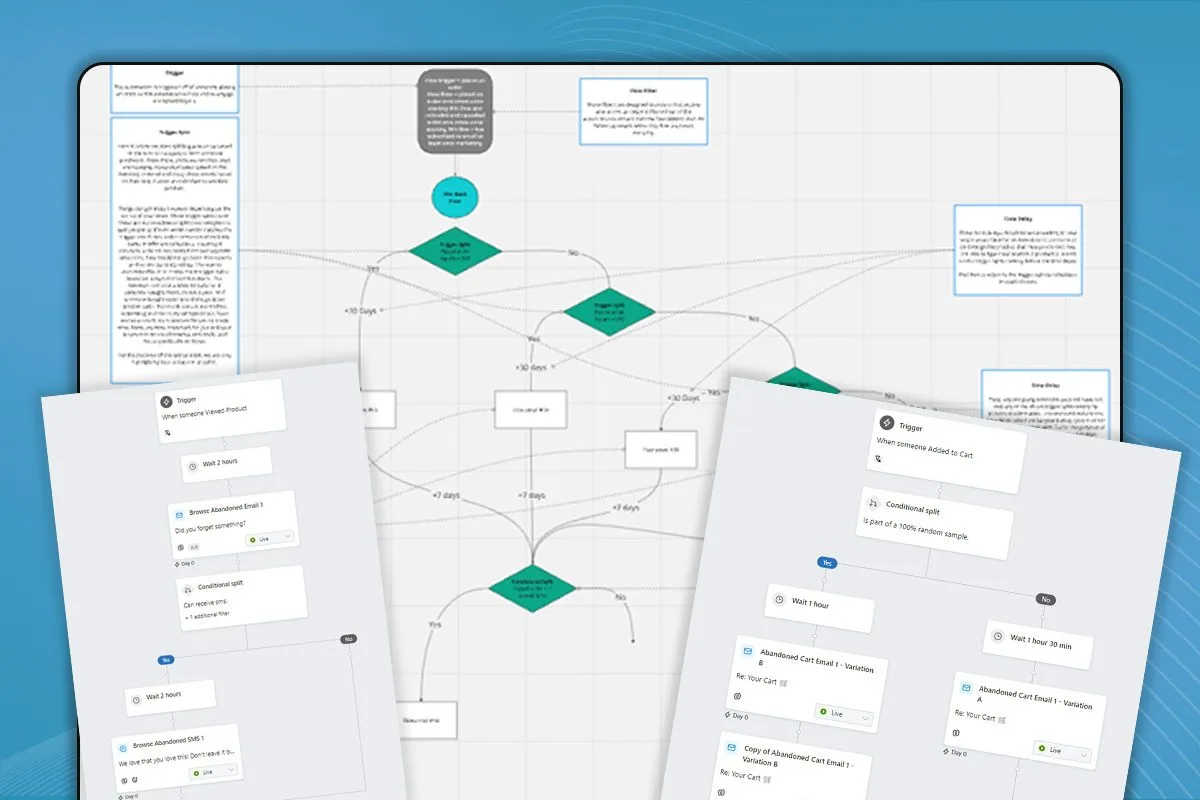
Start by creating a new flow triggered off the Placed Order metric. Before adding any messages, add two flow filters right at the top: cancelled order equals zero times since starting this flow, and refunded order equals zero times since starting this flow. If someone cancels their order two minutes after checking out, you do not want an automated email thanking them for their business.
Next, add a conditional split based on whether Placed Order equals one over all time. This lets you talk to first-time buyers differently from returning customers. Branch off both sides with a 20-minute time delay.
That 20-minute delay is deliberate. Shopify or WooCommerce will already send an automated, transactional order confirmation the second payment clears. You do not want two branded emails hitting the inbox simultaneously. Giving it 20 minutes makes the subsequent email feel personal, deliberate, and human.
Why Plain Text Founder Emails Win Every Time
For the emails in this initial placed order flow, drop the fancy drag-and-drop templates. Choose text only. Write a short, genuine note from the founder thanking them for supporting the business, explaining what their order means to the team, and inviting them to reply directly if they have any questions.
These plain text emails do not sell anything. Their entire job is to form an emotional connection between the customer and the person behind the brand. Because they look like a normal 1-to-1 conversation, they generate exceptional open rates, solid click rates, and direct replies that build genuine loyalty.
Do the same for second-time buyers on the other branch of your split, acknowledging their continued support. Make sure you turn off Smart Sending on these emails so every buyer receives them, and ensure your UTM tracking is enabled.
Triggering off Fulfilled Orders for Accurate Delivery Timing
Once an order is packed and dispatched, your second flow takes over. Create a new flow triggered by the Fulfilled Order metric. This is where you handle shipment notifications, product onboarding, and eventual cross-sells.
If you choose to send your shipment notification directly through Klaviyo instead of Shopify, you can turn off the default Shopify fulfilled email and apply for transactional status inside Klaviyo. This ensures high deliverability and helps your shipping updates land in the primary inbox rather than the promotions tab.
From there, calculate your average shipping window. If your parcels typically take 4 days to arrive, set a time delay of roughly 6 days from fulfillment before sending your next message. This guarantees the customer actually has the product in their hands before you follow up.
Using Trigger Splits to Personalise Education and Cross-Sells
Once the parcel has arrived, do not send a generic broadcast. Use trigger splits based on the item category or collection from the fulfilled order metric. We use trigger splits instead of conditional splits here because trigger splits evaluate the specific data attached to the event that started the flow.
If a customer bought from your accessories collection, route them down an accessories branch. If they bought from your apparel collection, route them down an apparel path. This allows you to tailor your content precisely to what they opened two days ago.
Your first email after delivery should focus purely on education and care. If you sell supplements, explain the best daily routine. If you sell skincare, provide application instructions. If you sell apparel, explain care guidelines. Driving product usage increases the perceived value of what they bought, which directly tilts their likelihood of buying again.
Incentivising the Second Purchase
After your educational email, add a delay of 4 to 5 days. Now you can introduce your cross-sell recommendations based on what you already know they like. If they purchased a table, recommend chairs, not another table.
Follow this cross-sell with another conditional split: Placed Order equals one over all time. If they still have not bought a second time, add a 4-day delay and present an incentive, such as a 10% or 15% discount on their next order.
Remember, acquiring a brand-new customer costs serious advertising money. Securing that second purchase is significantly more profitable, even with a modest margin discount, because your customer acquisition cost on that repeat order is effectively zero.
Final Thoughts
Post-purchase retention is not about sending one generic thank-you email and hoping for the best. By splitting your sequence into placed order and fulfilled order flows, leading with plain text founder emails, and using trigger splits for relevant product education, you turn a standard checkout into a repeatable retention engine.
To see what this looks like for a real brand, read how Dermavenue went from zero Klaviyo flows to $189,835.93 in flow revenue in our Dermavenue case study.
Automate Your Customer Retention
If you want our team to build high-converting post-purchase flows and retention systems directly inside your Klaviyo account, take a look at our Email Automations service.
Use Your Repurchase Window to Time Offers and Exit Rules
I like to calculate the average time between a customer's first and second purchase before setting cross-sell delays. In one client account, second purchases almost always happened within 23 days of the first order. I used that finding to build a three-email cross-sell sequence across that window.
This was a smaller brand generating roughly $41,000 a month through email just after a major sale period. Rebuilding its post-purchase flow lifted overall customer retention by 16%. The useful takeaway is the measurement behind the timing, not treating 23 days as a universal rule.
Let the buying window guide discounts
For that client, I kept complementary product offers at full price during the first 23 days. Once the window closed, day 24 became the point to consider an exclusive, time-sensitive incentive, provided margins allowed it. That gives customers time to return naturally before giving away margin.
Stop the cross-sell sequence when someone buys again
I add a filter requiring zero Placed Order events since starting the cross-sell automation. If someone purchases again on day three, they should leave that sequence and enter the repeat-buyer flow instead of continuing to receive prompts for a purchase they have already made.
Specific pairings to try
Quilted blankets with matching pillowcases or duvet covers.
Skincare cleansers with a complementary moisturiser or SPF.
Extra Controls, Shipping Details and Product-Specific Examples
Limit founder notes to the first two purchases
I would add a second order-count split to the returning-customer branch: Placed Order equals two over all time. Send the second-purchase thank-you there, and route customers with more than two orders out of this particular flow. That keeps the milestone notes from becoming repetitive on someone's fifth purchase.
I also make the sender name personal. Use something like "Gavin from In-box" rather than "In-box Team" or a faceless "info@" address. Beyond inviting replies, ask a genuine question to give customers something specific to respond to. Those replies can also support domain deliverability.
Populate the shipping email with order details
For the initial fulfillment notification, I pull in dynamic fields for the item name, tracking number, carrier tracking link, and shipping and billing addresses. That gives the customer the practical details in one place.
Make education and recommendations concrete
For leather boots, I would cover care instructions and weatherproofing.
For specialty coffee beans, I would explain grind size and brewing ratios.
For running shoes, I would recommend technical running socks or cleaning spray.
I also watch the habit an incentive creates. Handing out a coupon after every purchase can teach customers to wait for discounts, rather than return at full price.
Immediate Add-On Offers and Consumable Replenishment
Test an add-on opportunity before dispatch
I would test a separate opportunity email roughly 30 minutes after checkout, while the store is still fresh in the customer's mind. This is about adding to the order they just placed, rather than waiting until they have used the product. Possible offers include:
Adding another item to the same package without paying extra shipping.
A reminder of the same-day dispatch cutoff so an add-on can catch the same delivery window.
A coupon that expires strictly within 24 hours.
I would only promise combined shipping or a dispatch deadline if the fulfilment process can actually support it.
Time replenishment around consumption
For consumables, I would add a reminder to replenish the original product, not just recommend something complementary. If customers typically finish it in roughly 10 days, that gives me a concrete starting point for the reminder.
One store example used a 10-day delay with delivery at 7:00 a.m. because its customer data showed the strongest engagement early in the morning. I would treat those as store-specific settings, not defaults to copy. The useful distinction is timing the reminder around running out, then choosing the send hour from engagement data.
More walkthroughs
I've recorded a few more videos on this. Here's the newest one, and the others are tucked underneath.
Klaviyo Email Marketing Post Purchase FlowIncrease Sales With This Klaviyo Post Purchase Thank You Flow
Let's talk
Ready to grow your email revenue?
Book a free audit and we'll show you exactly where the revenue is hiding.