Why standard campaign broadcasting caps your growth
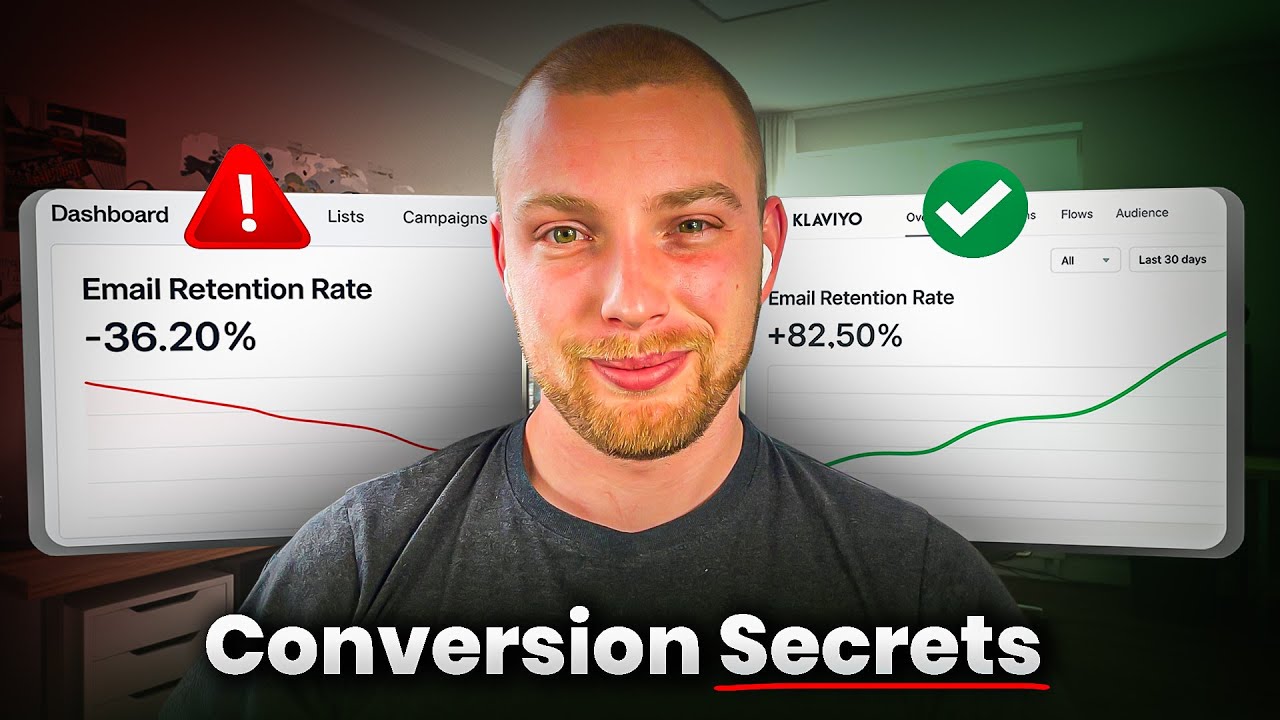
Most e-commerce stores hit a hard ceiling with email marketing somewhere around $50,000 to $100,000 in monthly store revenue. They know how to send regular campaigns in Klaviyo, but they treat their entire subscriber base as a single homogenous group. Every subscriber receives the exact same banner, copy, and promotion regardless of whether they have purchased five times or never pulled out their wallet.
When we take over an account, one of the first structural shifts we make is altering campaign delivery based on purchase history. For one of our clients generating roughly $400,000 a month in total revenue, this single campaign framework helped push email-attributed revenue past $116,000 a month. Scaling past those milestones requires actual campaign strategy, not just sending more emails.
For every standard broadcast campaign that is not a storewide sale, we split our sends into two distinct groups. We do not write two completely different emails. Instead, we send the same core campaign content to two specific audiences with one calculated difference.
We split our broadcast list into:
120-day engaged purchasers: Customers who have bought from you at least once and engaged with your emails or site recently.
120-day engaged non-purchasers: Subscribers who actively open, click, or browse, but have placed zero orders over all time.
The campaign content remains identical for both groups, but for the non-purchasers, we reiterate their unused welcome discount code directly in the header banner. Here is the thing: most subscribers do not buy from your welcome flow immediately. If you drop that incentive after email three of your welcome series, you throw away potential first orders.
How to build the non-purchaser segment in Klaviyo
Building an accurate non-purchaser segment is straightforward, but you need to capture true engagement across multiple touchpoints. If you only look at email opens, you leave high-intent shoppers behind.
In Klaviyo, set up your 120-day engaged non-purchaser segment with these definitions:
Opened email at least once in the last 120 days, OR
Clicked email at least once in the last 120 days, OR
Active on site at least once in the last 120 days, OR
Subscribed to newsletter in the last 30 days, OR
Viewed product, started checkout, or added to cart at least once in the last 120 days
AND can receive email marketing
AND placed order equals 0 over all time
For your purchaser segment, clone these exact conditions and simply switch the final rule to placed order is at least 1 over all time. It takes two minutes to set up, but it transforms your campaign performance.
When you analyse campaign revenue across mature Klaviyo accounts, roughly 80% of campaign revenue comes directly from people who have already purchased before. In our client data, we regularly see a single campaign generate $1,000 from past purchasers and $300 from non-purchasers on the exact same send.
That pattern tells you everything you need to know about customer lifetime value. Your existing customers carry the vast majority of your campaign revenue. Non-purchasers, on the other hand, need a clear nudge to get over the initial friction of their first order.
Do not obsess over preserving a 10% or 15% margin on that first order. Any margin you concede on order number one is easily recovered on orders two, three, and four. The priority is migrating subscribers out of the non-purchaser bucket and into the repeat-buyer pool as quickly as possible.
Reiterating the discount inside campaign headers is half the equation. You also need to reinforce that same incentive once those non-buyers click through to your website.
In Klaviyo, create an on-site reminder banner or popup specifically targeted to existing subscribers who have placed zero orders. When a non-purchaser clicks through an email campaign to browse your collection, this form triggers and presents their welcome code on screen.
You are now presenting the incentive at every single touchpoint before their first transaction. This setup lifts on-site conversion rates and directly complements your campaign revenue without showing unnecessary discount codes to your profitable repeat buyers.
Final Thoughts
Scaling past $100k and pushing towards $400k a month comes down to getting non-buyers over the line while protecting repeat customer margins. Split your campaigns by purchase history, reintroduce your welcome offer to non-buyers consistently, and reinforce that offer on-site. The repeat orders that follow will take care of the rest.
To see what this looks like for a real brand, read how Nordic Park grew Klaviyo to 33% of total revenue in our Nordic Park case study.
Scale your campaigns with In-box
If you want our team to audit your Klaviyo account and build high-converting campaign strategies for your store, explore our Email Campaign Management service and let us handle your strategy from end to end.
Fine-tune your segments, signup forms and follow-up timing
Once those foundations are in place, I like to tighten up the account setup with a few practical details.
Adjust engagement windows to account health. For a healthy account, I prefer a 90-day window. Engagement can mean an email open, a click, site activity or an order within that window, or a subscription in the last 30 days. If deliverability is poor, I tighten the window to 60 or 30 days while warming up the account.
Keep a separate consent-based audience for major announcements. My All Subscribed segment contains contacts with valid marketing consent. I reserve it for site-wide sales, major product releases and restock announcements rather than everyday campaigns.
Ask one preference question at signup. For a health or skincare brand, I might ask, "What is your primary goal?" with options such as weight management, skin aesthetics or recovery. I save the answer as a Klaviyo profile property, then use conditional splits in the welcome series to address that goal before purchase history exists.
Show the discount on the form's success step. I do not want a ready buyer leaving the site to hunt through their inbox for a code. Give them the code on screen and let the welcome email act as the backup.
Add a category-specific follow-up schedule. One setup I use starts with tracking details, waits seven days, then splits by the collection purchased. For a recovery purchase, that could mean two to three weeks of recovery education. If the customer still has not reordered after the typical replenishment cycle, I can introduce a complementary category such as daily vitality. I only layer in a dedicated second-order discount when the customer has exactly one order over all time.
Purchase-history splits for abandonment flows and returning visitors
I also use purchase history to change what happens inside browse abandonment and abandoned checkout flows. The objections facing a first-time shopper are different from those facing someone who already knows the product.
Give abandoned shoppers different paths
Zero orders: I reinforce the introductory offer, address first-purchase objections and include social proof alongside a direct checkout link.
One or more orders: I focus on product benefits or standard urgency rather than welcome messaging. Replenishment, routine building or complementary collections can give these customers a reason to finish their purchase.
Two or three orders: I can give these customers a VIP path with high-touch brand updates or early access perks instead of another discount.
Make on-site offers easier to redeem
For the subscriber discount reminder, I add a button with an auto-apply checkout link so the shopper does not have to copy the code manually.
I also use a separate retention popup for customers whose only order was more than 90 days ago. When they return to the site without having reordered, that popup can present a tailored incentive to bring them back.
Let's talk
Ready to grow your email revenue?
Book a free audit and we'll show you exactly where the revenue is hiding.