Every month we open Google Analytics and Search Console for each client and read where their visitors came from. Most of our clients are service businesses in Australia and New Zealand, like plumbers, roofers, lawyers and clinics. Email hardly ever appears in those reports, even for the businesses that send it. This article explains where those visits end up.
For the next step, see How to Calculate Your Subscription to Conversion Rate.
Where the visits come from
In July 2026 we checked nine client websites. Google Analytics sorts every visit into a channel, such as Organic Search, Paid Search, Direct, Referral or Email.
Direct made up between 12% and 58% of visits across the nine sites, and on four of them it was the biggest channel. A visit counts as Direct when someone types the address, uses a bookmark, or clicks a link that Google Analytics can't trace. Most links in emails and text messages fall into that last group.
Email had almost nothing against its name. Email and Unassigned visits together came to less than 4% on every site. From what we've seen so far, most service businesses send their emails with no tracking on the links, so those visits get counted as Direct.
What people type into Google
Search Console shows the words people typed before they clicked through to a site. We went through three months of it for a clinic in Sydney.
The clinic had 1,920 clicks from Google in that time. When we took out every search that included the clinic's name or one of its practitioners' names, 222 clicks were left. That means about 88% of the clicks came from people who already knew who they wanted.
Why we read the two together
Our read is that a lot of the people in both numbers are the same people. They've booked before or made an enquiry, and they come back by typing the business name into Google or the web address into their browser. An email with plain links sends people back the same way, so the report never shows those visits as email.
For a related breakdown, see How to Run a Klaviyo Executive Business Report.
We think these are the people worth staying in touch with. They already know the business, so a regular email is a simple way to stay in front of them between jobs.
What we ask clients to do
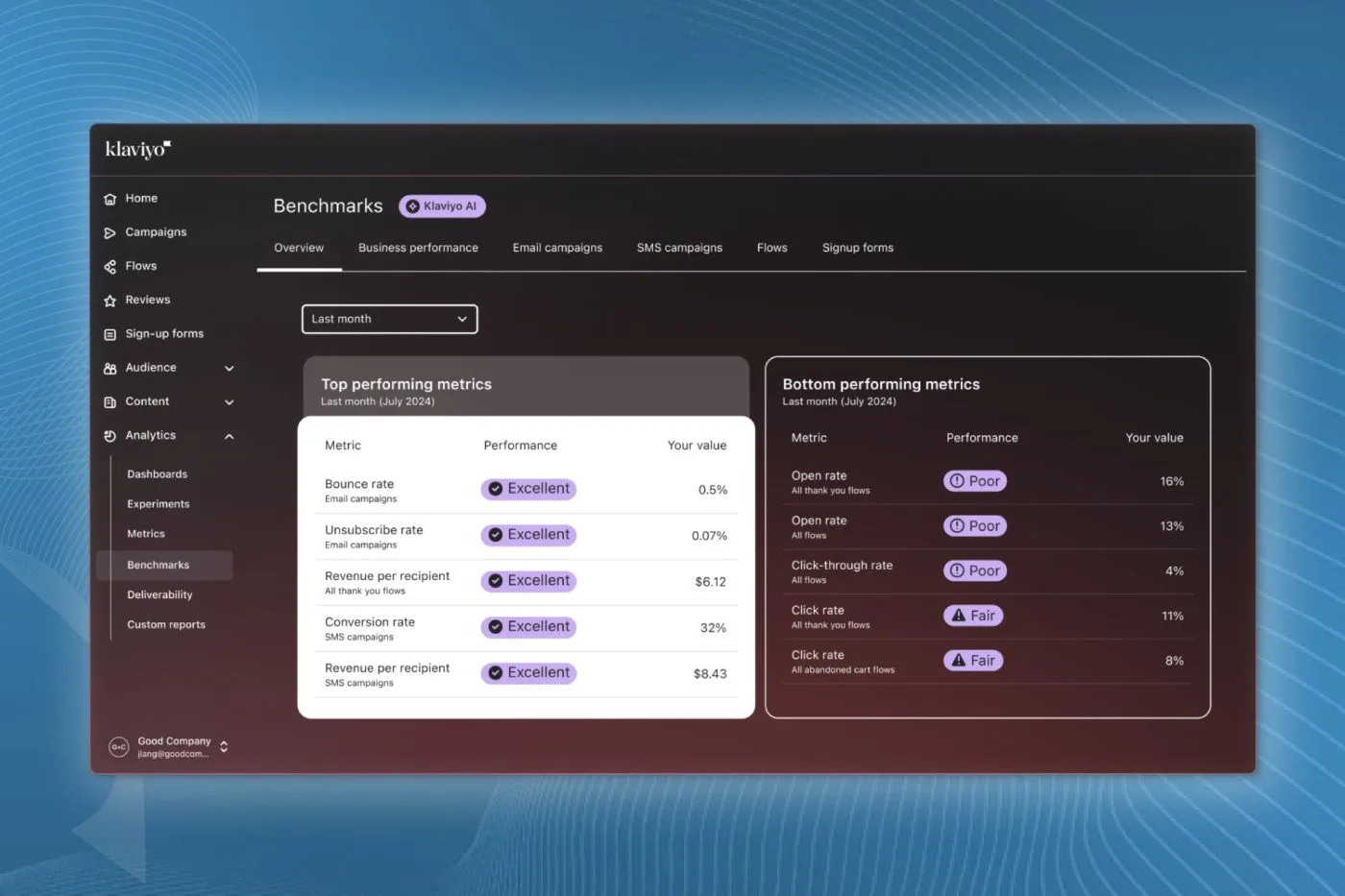
- Turn on link tracking in your email tool. In Klaviyo it's a setting that adds a small tag to every link, so Google Analytics can count those visits as Email. Most other email tools have the same setting.
- Watch your brand searches in Search Console in the week after you send. If the links have no tracking, more searches for your name is the clearest sign the email worked.
- Put the sign-up form on the pages people already visit. Search Console lists them, and the top five by clicks are a good place to start.
- Use the same business name, phone number and address in the email footer, on the website and on Google Maps. Someone who searches the name after reading an email then finds one matching result.
How we work with In-box
In-box builds the email side for businesses that ask for it, and Cluo looks after search. If you'd like to see where your own visits come from, book a call with Cluo.
Sources
- Google Analytics 4 session channel groups, July 2026, nine Cluo client properties (Cluo records)
- Google Search Console, three months to June 2026, one Sydney clinic property (Cluo records)